How to Crochet a Blanket for Beginners: Sizes, Yarn and Stitches
Your first blanket is mostly a planning problem. Here are standard sizes, a simple way to calculate your yarn and the stitches that work best.
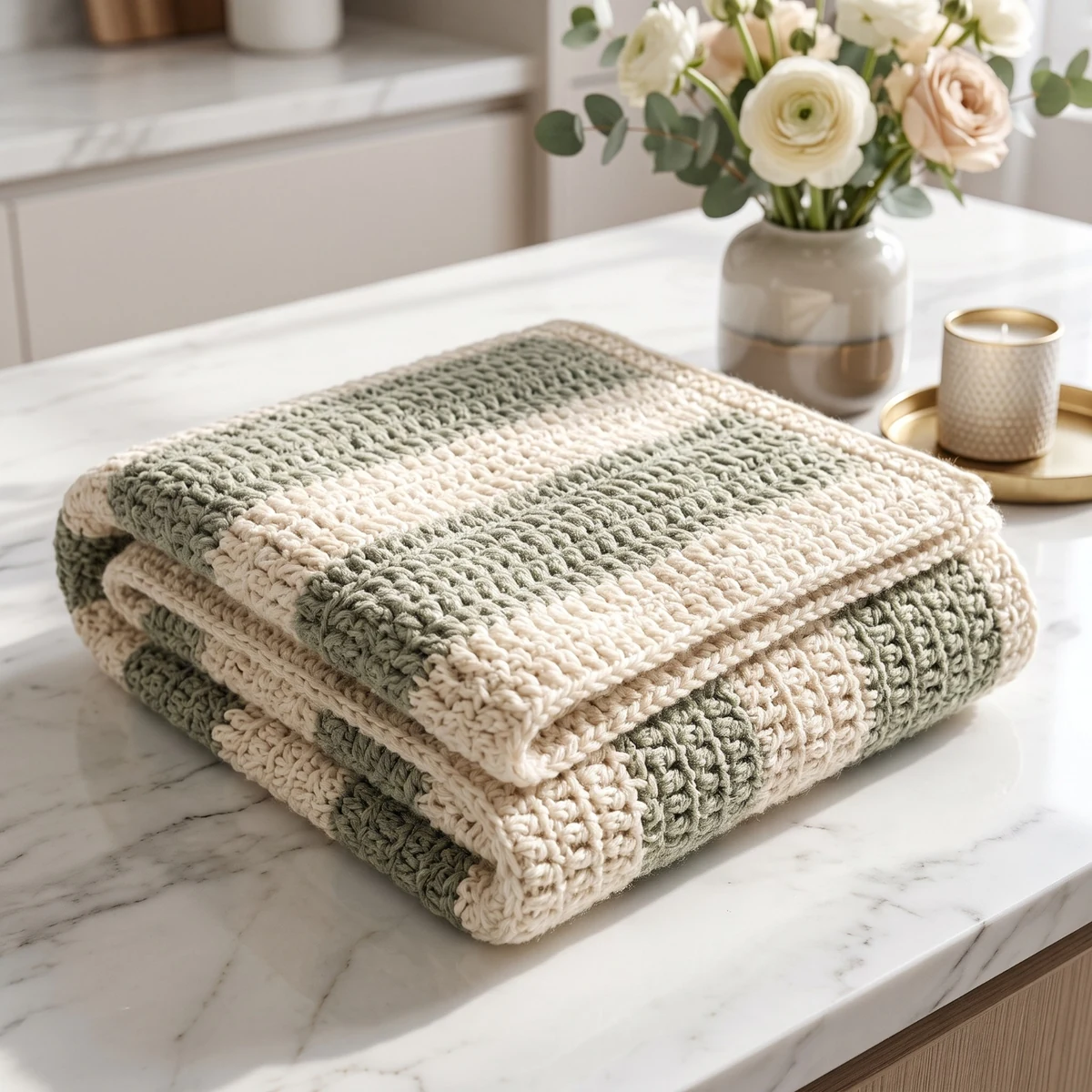
A blanket doesn't need difficult stitches. It's a big rectangle, and the challenges are mostly about planning: how big to make it, how much yarn to buy and how to keep the edges straight over thousands of stitches. If you sort those out before you start, the crochet itself is simple.
Stitch names here are US terms. UK and Australian readers should note that US double crochet (dc) is your treble (tr).
Pick a size
These are common sizes rather than strict rules. Start small if you haven't made a blanket before. A baby blanket or a lap blanket gets finished, whereas a bedspread can end up in a cupboard.
- Security blanket: 30 x 30 cm (12 x 12 in)
- Baby blanket: 75 x 100 cm (30 x 40 in)
- Lap blanket: 90 x 120 cm (36 x 48 in)
- Throw: 125 x 150 cm (50 x 60 in)
- Single or twin bed: 165 x 225 cm (65 x 90 in)
- Double or queen bed: 225 x 250 cm (90 x 100 in)
Work out how much yarn you need
General estimates vary so much with stitch and tension that it's better to calculate from your own work.
- Crochet a swatch of 15 x 15 cm (6 x 6 in) in your chosen stitch.
- Weigh it on a kitchen scale. Say it weighs 8 g.
- Find out how many swatches fit your blanket. A throw is 125 x 150 cm, which is 18,750 square cm. A 15 cm swatch is 225 square cm. So, that's about 83 swatches.
- Multiply: 83 x 8 g = 664 g.
- Add 10% for tension changes, tails and a border. That's about 730 g, or 8 balls of 100 g.
Buy all of your yarn in the same dye lot. Colors can vary between batches, even when the name and the number match. Our guide to gauge swatches covers measuring.
Choosing yarn
For a first blanket, choose something that's affordable, washable and that you enjoy touching. You'll have your hands on it for many hours.
- Acrylic: inexpensive, easy to wash and available in many colors. It's the common choice for everyday blankets.
- Cotton: cool and absorbent, but heavy once it's a big piece. Good for summer or for baby blankets.
- Wool or wool blends: warm and springy. Check the label for washing instructions.
- Chunky or super chunky yarn: finishes much faster, but makes a heavier blanket and uses more yarn by weight.
Choosing a stitch
Choose a stitch you won't get tired of after a thousand repeats.
- Double crochet: tall, quick and simple. The fastest of the basic stitches.
- Half double crochet: a bit denser and warmer than double crochet.
- Moss stitch: light, with a lovely drape. It's a nice choice for a throw.
- Suzette or waffle stitch: adds texture. Waffle is warm but uses a lot of yarn.
- Granny squares: you make the blanket in small, portable pieces, then join them.
Avoid single crochet for the whole of your first blanket. It's slow, and it makes a stiff fabric at a large size.
How to start
The foundation chain is a long one, so the most common problems show up right at the start.
- Work out your chain: from your swatch, count how many stitches fit into 10 cm. Divide your blanket width by 10 and multiply by that number. Add the turning chain for your stitch.
- Use a hook one size up for the foundation chain, so that it isn't tighter than the rest of the blanket.
- Place a stitch marker every 25 chains as you go. It saves you counting them all over again.
- Chain several more than you need. It's easier to undo the extras afterward than to add more.
Keep your edges straight
Over a long project, the most common problem is a blanket that narrows or widens. To prevent it:
- Put a marker in the first and last stitch of each row
- Count your stitches at the end of every row for the first 10 rows, then every few rows after that
- Lay it flat from time to time, and look at the edges
If it does go wrong, our list of common crochet mistakes explains why and how to fix it.
Add a border
A border makes the whole blanket look finished, and it also hides uneven edges. The simplest method is to work a round of single crochet around all four sides, with 3 sc in each corner. You can then add a second round in a different color. Work about 1 sc per row end on sc rows, and 2 sc per row end on dc rows.
Finishing
Weave in every end well, particularly on a blanket that will be washed a lot. Blocking helps to square up the sides, and a clean floor covered in towels works if you don't have a blocking mat. Acrylic blankets usually relax after their first wash.
Frequently asked questions
How long does it take to crochet a blanket?
It depends on your speed, yarn and stitch. A chunky baby blanket might take a couple of weeks of evenings. A worsted throw might take a month or more. Tall stitches and thick yarn are the quickest.
Are blankets safe for babies?
Don't use blankets with an open lacy stitch, or any decorations that may come loose, for small babies. Follow your local safe sleep guidance, which usually recommends keeping blankets out of the crib for young infants.
Which hook size should I use?
Use the size on your yarn label as a starting point, or check our hook size chart. For a soft blanket, many people go up a size or two for extra drape.
Granny Square Tote Bag, Market Bag & Round Bag Crochet Patterns – Digital crochet pattern (PDF)