How to Block Crochet: Wet, Spray and Steam Methods by Yarn Type
Blocking turns curled, uneven crochet into a flat, tidy piece. The right method depends on your yarn, and one mistake can ruin acrylic for good.
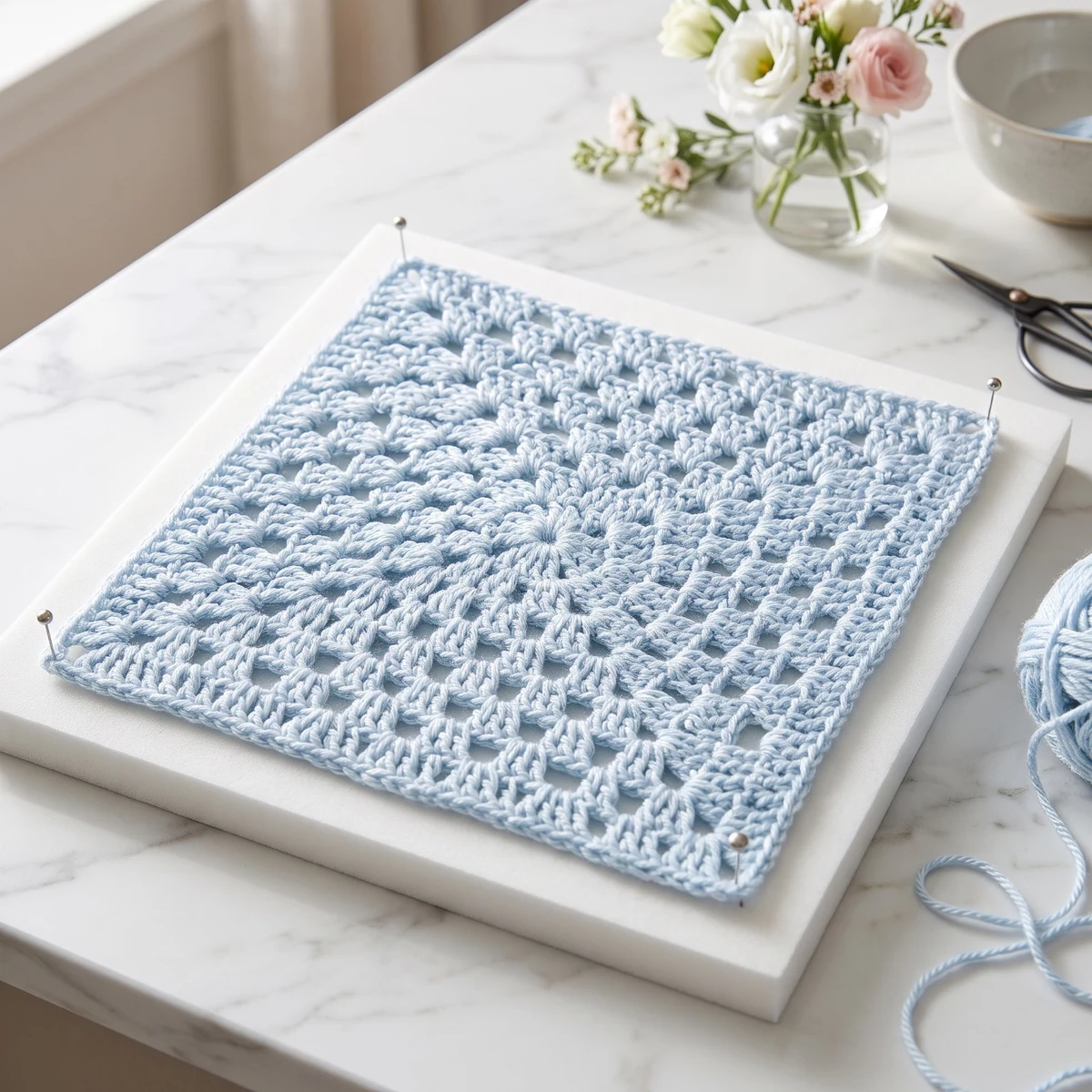
Your granny squares are all slightly different sizes, your doily curls up at the edge and the scarf won't lie straight. None of this means you did anything wrong. Blocking fixes all of it: you dampen or steam the fabric, pin it into shape and let it dry.
It takes a few minutes of work and some drying time, and it's often the difference between something that looks homemade and something that looks finished.
What you need
- A surface you can pin into, such as foam play mats, a blocking board or a towel on a carpet
- Rust-proof pins, because ordinary pins can leave marks on damp yarn
- A tape measure, if the piece has to be a certain size
- A spray bottle, a bowl of water or a steamer, depending on the method
Which method for which yarn?
Check the fiber on your yarn label first.
- Cotton and linen: wet blocking or spray blocking. Both hold their shape well once dry.
- Wool and other animal fibers: wet blocking. Handle gently, and avoid hot water and rubbing, which can cause felting.
- Acrylic: steam blocking, carefully. Water alone doesn't do much, because plastic fibers don't change shape when wet.
- Blends: treat them like the most delicate fiber in the mix, and test on your swatch first.
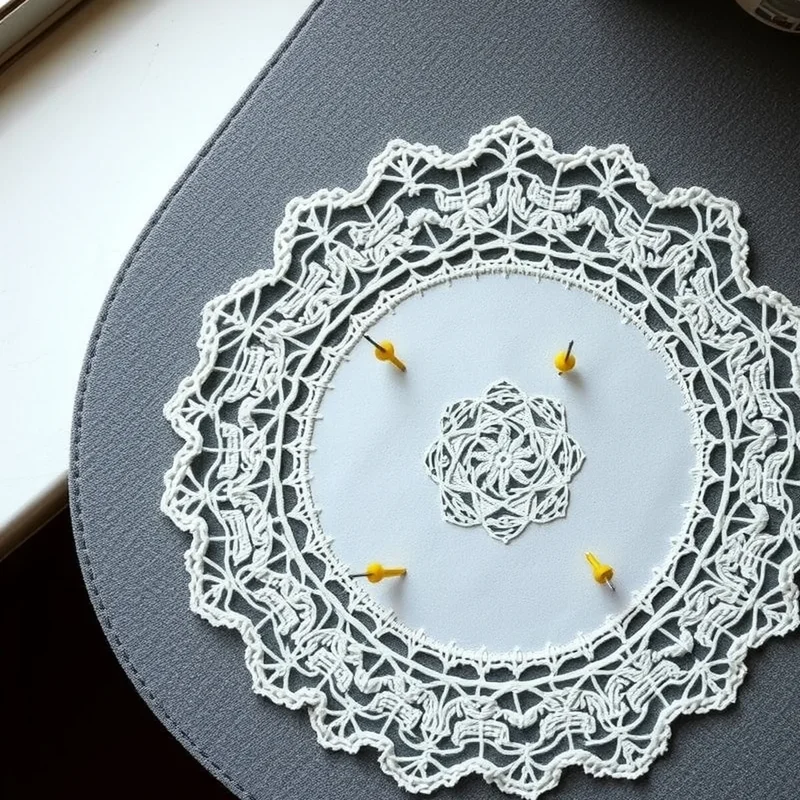
Wet blocking
This is the best method for lace and for anything that needs a real change of shape.
- Soak the piece in cool water for about 15 minutes.
- Lift it out supporting the weight, and gently press out the water. Don't wring it. Rolling it in a towel helps.
- Lay it on your mat and shape it with your hands. Pin the corners first, then the middle of each side, then in between.
- Leave it until it's completely dry, which can take a day or more. Unpinning early undoes the work.
Spray blocking
A gentler option for small pieces, and good for squares and coasters.
- Pin the dry piece to shape on your mat.
- Spray with water until it's damp but not dripping.
- Press lightly with your hand to help it settle, then leave it to dry.
Steam blocking
This is the method for acrylic, and it needs the most care.
- Pin the piece to shape on a heat-safe surface.
- Hold a steamer or steam iron several centimeters above the fabric and let the steam reach it.
- Never let the iron touch the crochet. Direct heat can melt or permanently flatten acrylic, which crocheters call "killing" it. The fabric goes limp and shiny and won't recover.
- Let it cool and dry fully before unpinning.
Test on your swatch first if you've never tried it. Keep your hands clear too, because steam burns quickly.
What not to block
- Amigurumi and stuffed toys. They don't need it, and the shape comes from the stuffing.
- Textured stitches you want to keep raised, such as bobbles, puffs and popcorns. If you do block them, don't press them flat.
- Ribbing and stretchy cuffs. Pinning these out stretches them, and they may not spring back.
Blocking a set of squares
If you're making a blanket from squares, block them all to the same measurement. Draw the size on paper under clear plastic, or mark it on your mat, and pin each square to the same outline. Squares that were a little different in size will then join up easily. You can also buy a board with pegs for this, which makes it quicker if you make a lot of them.
Frequently asked questions
Is blocking permanent?
On natural fibers, it lasts until the next wash, so you may need to reshape the piece afterward. Steam-blocked acrylic keeps its shape much longer.
Do I have to block my crochet?
No. Many everyday items are fine without it. It helps most with lace, squares that need to match, and anything that curls.
Should I weave in my ends first?
Yes, weave in your ends first, but wait until after blocking to trim them. That leaves slack in case the fabric stretches.
How long does it take to dry?
Anywhere from a few hours for a sprayed coaster to a couple of days for a soaked blanket, depending on the yarn and your room. A fan speeds it up.
Granny Square Tote Bag, Market Bag & Round Bag Crochet Patterns – Digital crochet pattern (PDF)