Easy Crochet Scarf for Beginners: A Simple Moss Stitch Pattern
Moss stitch uses only chains and single crochet, yet looks far more complicated. Here is how to size it, work it and keep the edges straight.
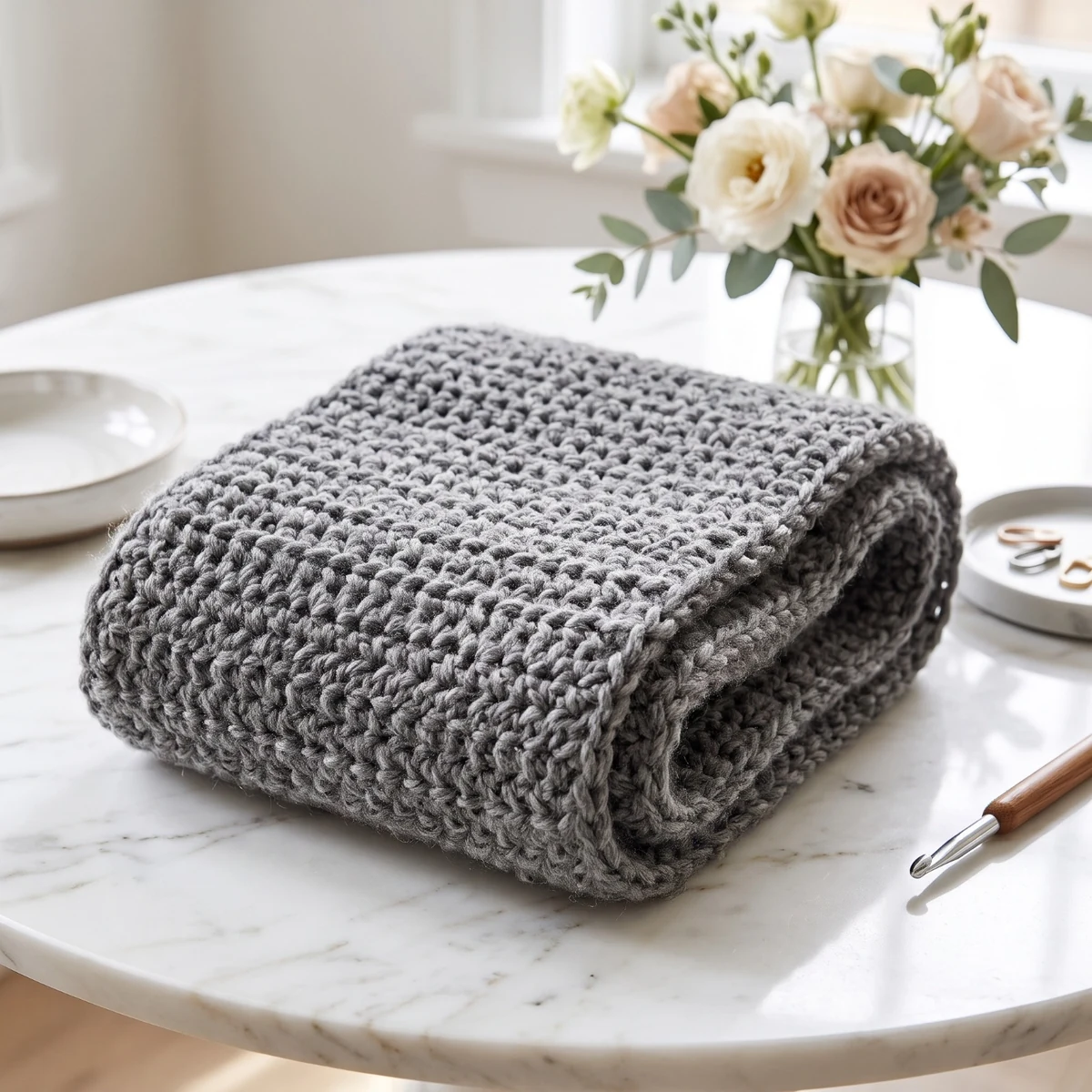
A scarf is a good first big project because it's just a long rectangle. There is no shaping, and if you lose an inch of width somewhere, nobody will measure it. The stitch does the heavy lifting here. Moss stitch, also called linen stitch or granite stitch, only uses chains and single crochet, but the finished fabric looks neat and woven, and it drapes better than plain rows of single crochet.
If you've never held a hook, first read our crochet for beginners guide.
What you need
- Yarn: medium (worsted) weight in a smooth, light color. Dark or fuzzy yarn makes it harder to see the stitches.
- Hook: 5.5 mm (I-9). Check the hook size chart if yours shows only a letter.
- Tapestry needle, scissors and a stitch marker
Allow roughly 300 to 450 meters of yarn for a scarf of about 20 x 150 cm. Your tension changes this, so buy one extra ball if you aren't sure, and buy all the yarn at once in the same dye lot.
How many chains to start with
As a rough starting point, 32 chains in worsted yarn with a 5.5 mm hook will make a scarf of around 20 cm wide. Everyone's tension differs, so it's worth checking:
- Chain 20 and work about 10 rows of the pattern below.
- Measure how many stitches fit in 10 cm. In this pattern, every chain space and every single crochet counts as one stitch.
- Multiply that number by 2 for a 20 cm scarf, then round to an even number and add 2.
The starting chain must always be an even number. Our guide to checking gauge explains how to measure a swatch.
The pattern (US terms)
Foundation: chain an even number. We'll use 32 here.
Row 1: sc in the 4th ch from the hook. Then work this pair of steps across the row: ch 1, skip the next ch, sc in the next ch. Your last sc goes into the final chain.
Row 2: ch 2 and turn. Sc in the first ch-1 space. Then work this pair of steps across the row: ch 1, skip the next sc, sc in the next ch-1 space. The last sc goes into the space made by the turning chain from the row before.
All other rows: repeat Row 2 until the scarf is as long as you like. A good length is about the height of the person who'll wear it, or a little shorter. FO and weave in the ends.
So every row is the same. Once you can do Row 2, you know the entire pattern.
How to keep the edges straight
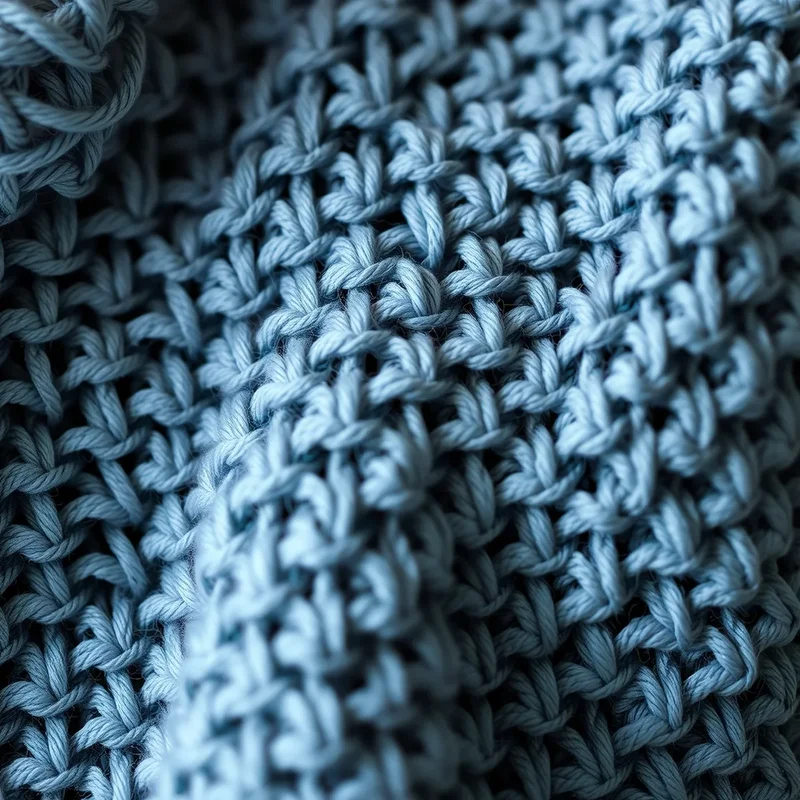
Moss stitch's one difficult spot is the end of the row, since the last stitch goes into a space that's easy to miss.
- Put your stitch marker in the turning chain space at the start of each row. When you reach the end of the next row, the marker shows you exactly where the last sc goes.
- Count the single crochet stitches every few rows. In our 32-chain example, Row 1 has 15 sc, and every row after it should as well.
- If your scarf is getting narrower, you're most likely missing that last space. Our list of common crochet mistakes goes through this and other problems.
How to add a fringe
A fringe also hides the fact that the top and bottom edges of a scarf look slightly different.
- Cut pieces of yarn about 30 cm long, using 3 for each tassel.
- Fold a bundle in half to make a loop.
- Pull the loop through a stitch at the edge of the scarf with your hook.
- Pull the tails through the loop and tighten.
- Trim the bottom so that all of the tassels are level.
Leave a gap of 3 or 4 stitches between tassels, and do the same on both ends.
Easy ways to change it
- Stripes: change color at the start of a row. Here's how to change colors in crochet.
- Chunky version: use bulky yarn with an 8 mm hook and fewer chains. It's faster, though heavier. Swatch first to work out the new starting chain.
- Cowl: stop at about 70 cm long and sew the short ends together.
Blocking relaxes the fabric and makes the stitch pattern look more even, and it's particularly worth doing on natural fibers. See how to block crochet.
Frequently asked questions
How long does it take to crochet a scarf?
A beginner might spend a good number of evenings on this one, since a full-length scarf runs to a few thousand stitches. A bulky yarn and a bigger hook will cut down the time a lot.
What's the difference between moss stitch and linen stitch?
In crochet, they're generally the same pattern, and you'll also see it called granite stitch or woven stitch. The name changes by designer. Knitting has its own, different moss stitch.
Is this stitch reversible?
Yes. It looks essentially the same on both sides, which is ideal for a scarf, because both sides show when you wear it.
Is there another texture I could try?
Waffle and suzette are two good options. Our guide to textured crochet stitches covers them.
Granny Square Tote Bag, Market Bag & Round Bag Crochet Patterns – Digital crochet pattern (PDF)