How to Check Crochet Gauge (and When You Can Skip It)
Gauge decides whether your finished piece comes out the size the pattern promises. Here is how to measure it and when it matters.
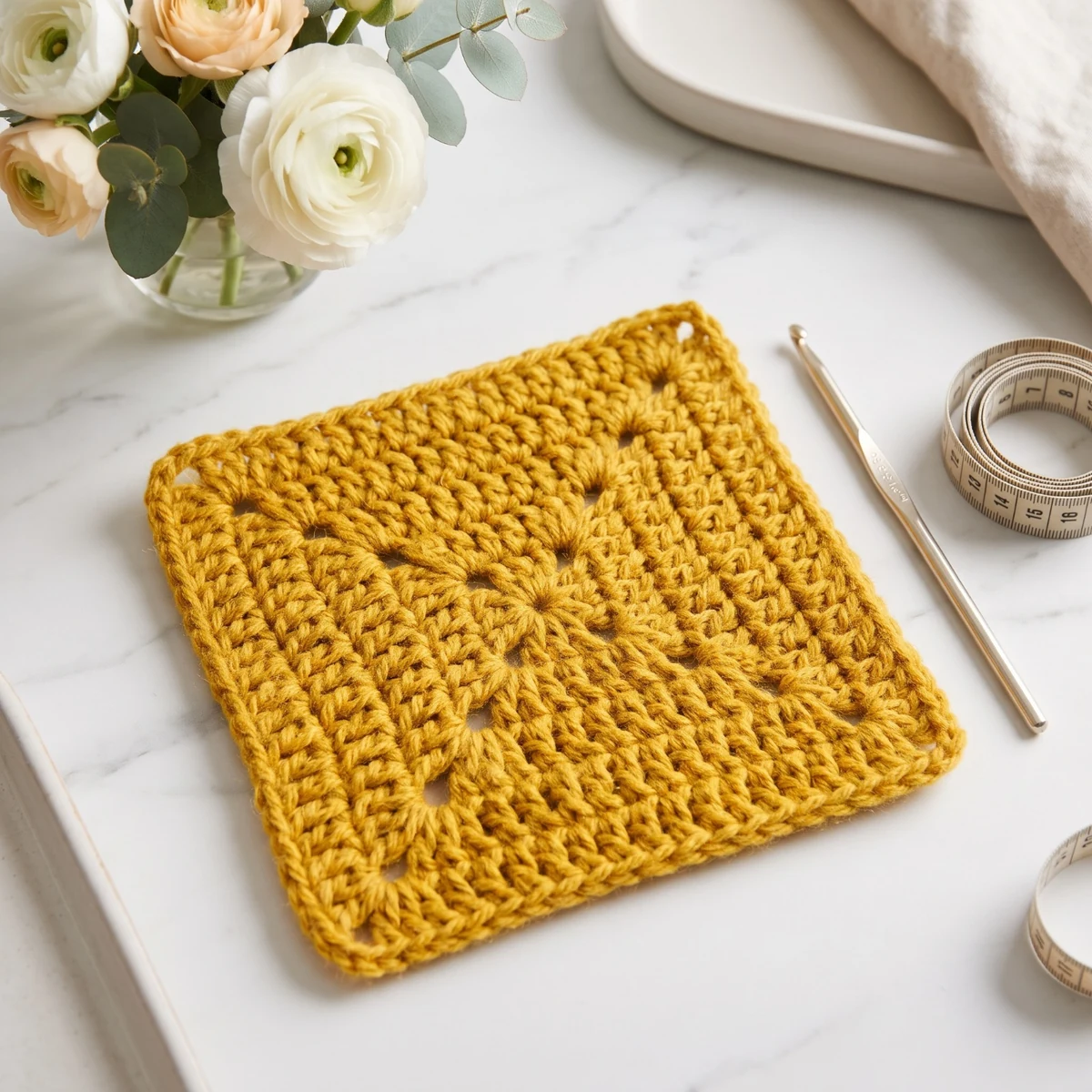
Gauge is the number of stitches and rows you get in a set area, usually 10 x 10 cm (4 x 4 in). Two people can use the same yarn, hook and pattern and still end up with different sizes, because everyone holds their yarn differently. The swatch shows you where you stand before you've spent 20 hours on a project.
It's the step most of us want to skip. Sometimes you can.
When gauge matters and when it doesn't
Check it for anything that has to fit: sweaters, hats, socks, gloves, or a cover for a specific cushion.
Check it when you're short on yarn. Working loosely uses more yarn, and you could run out before the end.
You can usually skip it for: coasters, dishcloths, scarves, ornaments and most toys. If an amigurumi comes out slightly bigger than the photo, it's still a good toy. For those, what matters is that the stitches are tight enough to hide the stuffing.
How to make a gauge swatch
- Use the exact yarn and hook you plan to use for the project. A different color of the same yarn is fine, but a different brand may not behave the same way.
- Crochet a square at least 15 x 15 cm (6 x 6 in), using the stitch the pattern's gauge line names. If it says "16 dc x 8 rows", make your swatch in double crochet.
- Fasten off and lay it flat. If you'll wash the finished item, wash and dry the swatch the same way first, since some yarns relax a lot.
The swatch is larger than the area you'll measure because edge stitches are often uneven. You want to count from the middle.
How to measure it
Lay the swatch on a table without stretching it. Place a ruler or tape across the middle and count how many stitches fit in 10 cm (4 in), including half stitches. Then turn the ruler and count the rows the same way.
Measure in two or three places. If you get different numbers, use the average.
What to do if your numbers don't match
- Too many stitches: your stitches are small, so the project will come out too small. Go up a hook size.
- Too few stitches: your stitches are large, so the project will come out too big. Go down a hook size.
Then make another swatch. It's tempting to squeeze or loosen your stitches instead, but it's hard to keep that up for a whole project. Changing the hook is more reliable. See the crochet hook size chart for the next size up or down.
If you match the stitch count but not the rows, go with the stitches. They set the width, and you can often add or remove a row or two to fix the length.
Why your gauge can change
Your gauge isn't fixed. It can drift when you're tired, stressed or watching something tense on TV, and many people crochet more loosely as they relax into a project. On a large piece, compare it with your swatch now and then, and take a look if the fabric starts to feel different.
A quick way to see what a change does
The math is simple, and it's worth seeing once. Say a pattern's gauge is 16 stitches per 10 cm, and the piece has 80 stitches, so it should be 50 cm wide. If your gauge is 18 stitches per 10 cm, those 80 stitches come out at about 44 cm. That's a 6 cm difference from just two extra stitches per 10 cm, which is why small differences matter on anything that has to fit.
Frequently asked questions
Is gauge the same as tension?
Yes, in practice. "Gauge" is the usual US word, and "tension" is the usual UK word. Our guide to US and UK crochet terms lists other differences.
Can I use my swatch for something?
Yes. Small swatches make good coasters or gift tags, and you can keep them with a note of the yarn and hook for next time.
Does gauge matter for amigurumi?
Not much for size. What matters is that the fabric is tight. If you can see gaps when you stretch it gently, go down a hook size. Our guide on how to stuff amigurumi explains why.
Granny Square Tote Bag, Market Bag & Round Bag Crochet Patterns – Digital crochet pattern (PDF)