Crochet Hook Size Chart – US to Metric, with Yarn Weights
US letters, millimeters and yarn weights in one place, plus how to pick the right hook for amigurumi and when to go up or down a size.
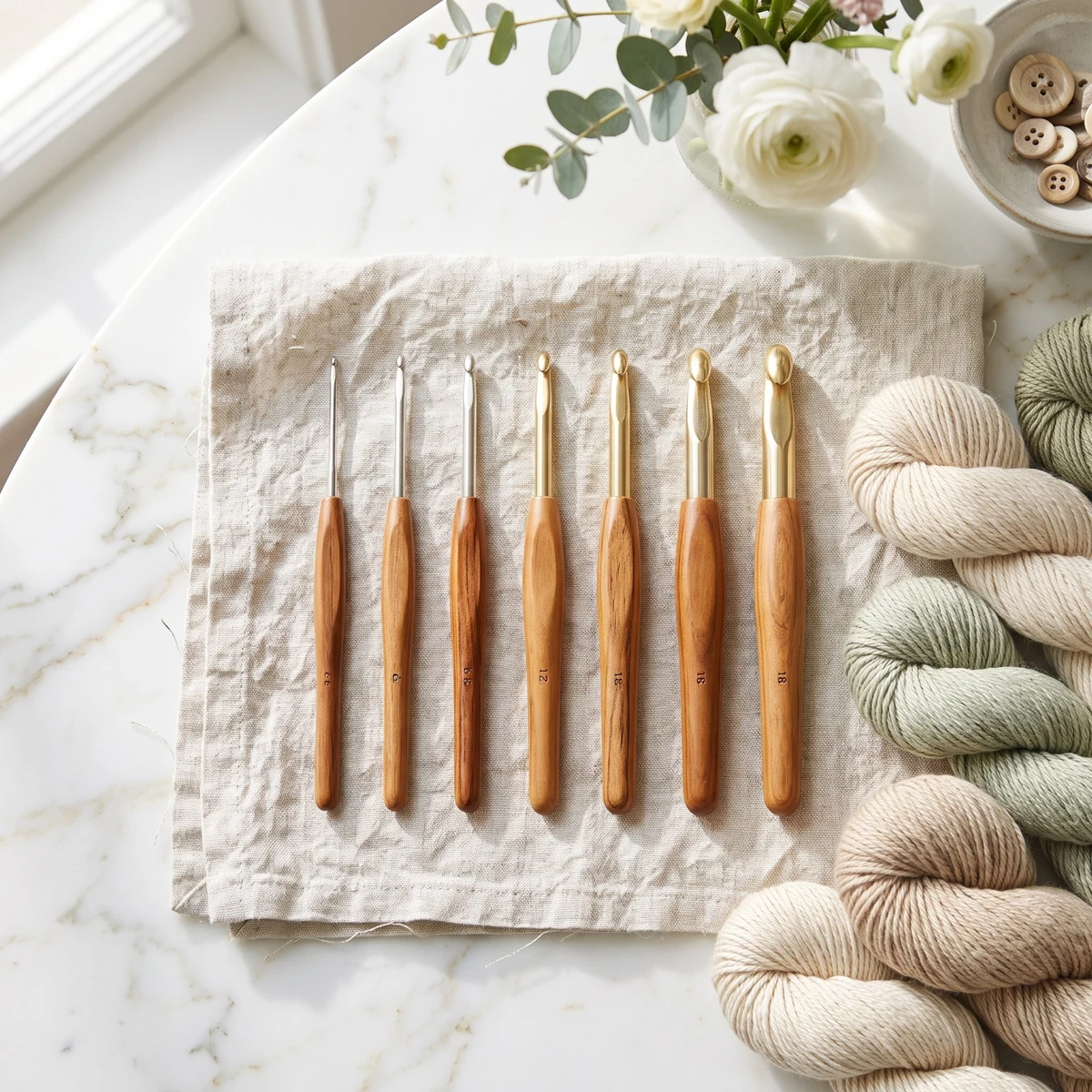
Pattern says H-8, but your hook says 5 mm? This crochet hook size chart converts US letters to millimeters and shows which hook suits each yarn weight. The millimeter measurement is the most reliable number to go by, because it describes the actual size of the hook, while letters can vary between brands.
Crochet hook sizes: US to metric
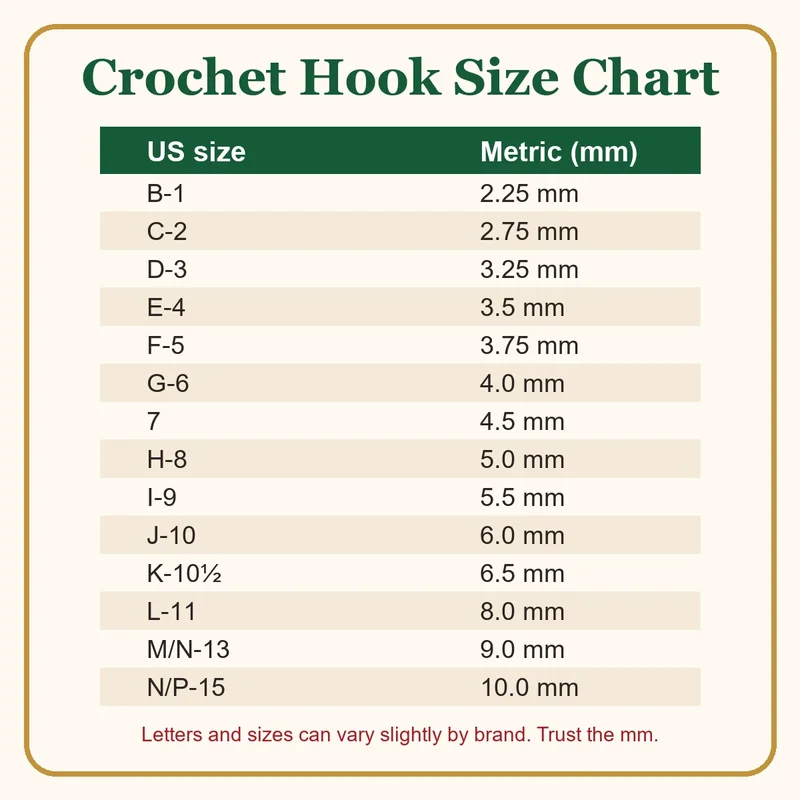
- B-1: 2.25 mm
- C-2: 2.75 mm
- D-3: 3.25 mm
- E-4: 3.5 mm
- F-5: 3.75 mm
- G-6: 4.0 mm
- 7: 4.5 mm
- H-8: 5.0 mm
- I-9: 5.5 mm
- J-10: 6.0 mm
- K-10½: 6.5 mm
- L-11: 8.0 mm
- M/N-13: 9.0 mm
- N/P-15: 10.0 mm
Which hook for which yarn weight?
These are the ranges recommended by the Craft Yarn Council's standard yarn weight system. Use them as a starting point, and check your yarn label too.
- 0 Lace: 1.5-2.25 mm
- 1 Super fine (fingering, sock): 2.25-3.5 mm
- 2 Fine (sport): 3.5-4.5 mm
- 3 Light (DK, light worsted): 4.5-5.5 mm
- 4 Medium (worsted, aran): 5.5-6.5 mm
- 5 Bulky (chunky): 6.5-9 mm
- 6 Super bulky: 9-15 mm
- 7 Jumbo: 15 mm and larger
What size hook for amigurumi?
Amigurumi is usually worked with a smaller hook than the yarn label suggests. Tight stitches keep the fiberfill from showing through and help the piece hold its shape.
For example, our Christmas spiral ornaments use DK or light worsted yarn with a 3.0-3.5 mm hook, even though the standard range for that weight is 4.5-5.5 mm. If you can see stuffing through your stitches, go down a size.
How to choose the right hook size
- Start with your pattern. Use the hook it names, since the finished size and stitch counts depend on it.
- Check the yarn label. If the pattern gives no size, the label usually suggests one.
- Make a small swatch. Compare it with the pattern's gauge if one is given.
- Adjust. Too many stitches per 10 cm (4 in) means your work is tight, so go up a size. Too few means it is loose, so go down a size.
When to go up or down a size
- Go smaller for amigurumi, firm baskets or anything that needs to hold its shape
- Go larger for soft drape, like shawls and blankets
- Go larger if your hand gets tired from working very tight stitches
If you are making something where size matters, like a garment, swatch before you start. For decorations, small differences rarely matter. See our crochet Christmas ornament patterns for projects that are forgiving of a small change in size. Ready to start stitching? Learn how to single crochet. To check that your hook gives the right size, see how to check crochet gauge. For toys, read about the best yarn for amigurumi. If two hooks of the same size feel different, read about inline vs tapered crochet hooks.
How to measure a hook with no markings
The size is measured across the shaft, the straight part of the hook just below the head. A knitting needle gauge with labeled holes is the easiest tool: find the smallest hole the shaft fits through and read the size next to it.
Frequently asked questions
What is the most common crochet hook size?
For beginners, H-8 (5.0 mm) is a popular choice because it works well with common worsted weight yarn. It is large enough for you to see your stitches clearly.
Are UK and US hook sizes the same?
No. Older UK hooks use a different number system, so go by the millimeter size. It means the same thing everywhere.
What is the difference between a 3.5 mm and a 3.75 mm hook?
Only a quarter of a millimeter, but this can change your finished size in a large project. They are E-4 and F-5 in US sizing.
Do I need a different hook for cotton yarn?
Not a different size, but cotton has less stretch, so your stitches can feel tighter. Many crocheters find a smooth metal hook helps it glide. Compare your stitches with your pattern and adjust as needed.
Granny Square Tote Bag, Market Bag & Round Bag Crochet Patterns – Digital crochet pattern (PDF)