Inline vs Tapered Crochet Hooks: What's the Difference?
Two hooks can be the same size and still feel completely different. Here's what changes between inline and tapered, and how to tell which you prefer.
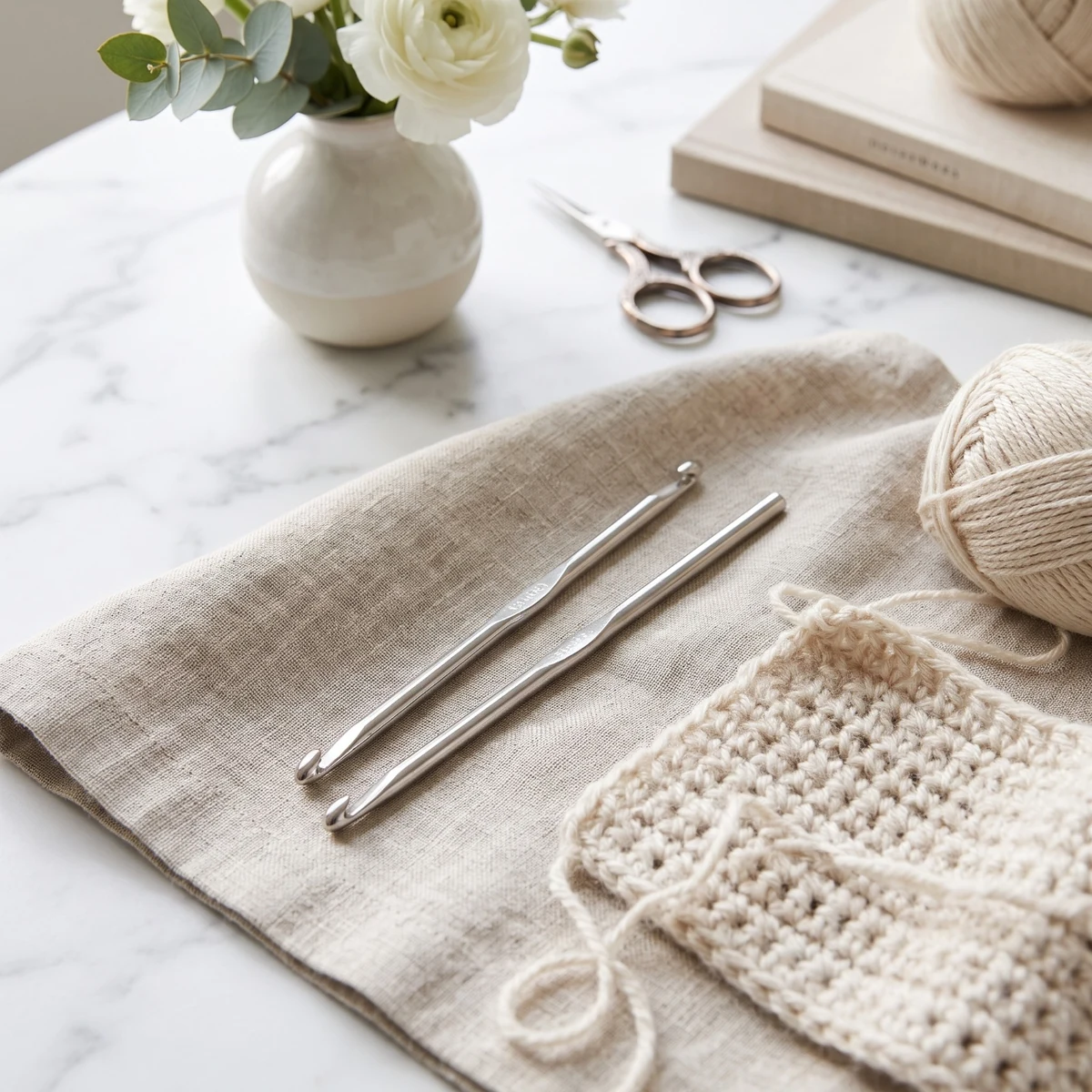
If a new hook has ever made your stitches come out tighter or looser than usual, even though the size was the same, the shape of the head is the likely reason. Most hooks fall into one of two types: inline or tapered. Neither is better. The right one depends on how you hold the hook and how you tension your yarn.
The difference
- Inline hooks: the head is lined up with the shaft and is about the same width. The throat, the groove the yarn sits in, is cut straight into the hook. Susan Bates is the brand most often named as an example.
- Tapered hooks: the head is narrower than the shaft, and it widens gradually through a long, sloping throat. Boye is the brand usually given as the tapered example.
To check your own hook, hold it sideways at eye level. If the head and shaft form one straight, even line, it's inline. If the head looks smaller and the hook gets thicker as you move down the throat, it's tapered.
Shapes vary between product lines, and some hooks sit somewhere in between. So check the hook itself rather than going only by the brand.
How each one changes your crochet
Stitch size
The thickest part of the hook that your loop passes over sets the size of your stitch. An inline hook gives you a fixed point: the loop sits on the shaft. On a tapered hook, the loop can sit anywhere along the sloped throat, so stitches can vary a little more until your hands get used to it.
Loop handling
A tapered head has a narrower tip, which makes it easy to slide out of a loop. That's why many people find it faster and smoother. An inline hook's more pronounced head grips the yarn well, and some crocheters find that it makes tight spaces easier to get into, particularly with amigurumi.
Grip
The way you hold the hook matters too. Crocheters using a knife grip often say that they like the way an inline hook sits. Pencil grip users often go for tapered. That's a tendency rather than a rule, so don't let it decide for you.
Which one should you choose?
Try an inline hook if:
- You often end up with stitches of uneven size
- Your yarn tends to slip off the hook
- You crochet very tightly and need help getting into your stitches
Try a tapered hook if:
- You like a fast, smooth rhythm
- Your yarn tends to catch on the head as you pull it through
- You work with slippery or lightweight yarn and want a fine tip
There's only one way to know for sure. Buy one of each in the same size, which is cheap to do with basic aluminum hooks, and make a swatch using each. H-8 (5 mm) is a good size for this test.
Will changing hook type change my gauge?
It can. Two hooks both labeled 5 mm won't necessarily give you the same stitch size if their shapes differ. That's why you should:
- Make a new swatch if you change the hook type on any project where size matters.
- Stay with one hook from start to finish. Changing halfway can leave a visible line in the fabric.
- Adjust the size if needed. A pattern gives a hook size as a starting point, not as a rule.
Our guide on how to check crochet gauge walks you through it, and the crochet hook size chart converts the letters to millimeters.
What about handles?
Head shape and handle are two separate things. Soft handles, wood or bamboo handles and thick ergonomic grips can come with either type of head. If your hand or wrist hurts when you crochet, a thicker handle is likely to help more than changing the head shape. Take regular breaks too, and if the pain continues, it's worth talking to a doctor or physical therapist.
Material matters as well. Aluminum is slick and quick, while bamboo has more grip, which is useful on slippery yarn.
What's best for amigurumi?
Both types work for amigurumi, but the small, tight stitches give you a good reason to test them side by side. Some people prefer an inline head for pushing into dense single crochet, and others just like the smooth feel of a tapered hook. Whichever you use, make your stitches tight enough that stuffing doesn't show through.
Frequently asked questions
Which type of hook is best for beginners?
Neither is automatically better. A beginner benefits most from a plain 5 mm aluminum hook of either type, along with a smooth medium weight yarn. Our beginner guide has a full list of what to buy.
Are expensive hooks better?
Sometimes they're more comfortable to hold for long periods, which is the main thing you pay for. The stitches themselves depend on your tension and the head shape, and an inexpensive hook can do the job perfectly well.
Can I use both types in my collection?
Yes. Plenty of crocheters keep both and match the hook to the yarn. Just stay with one for each project.
Granny Square Tote Bag, Market Bag & Round Bag Crochet Patterns – Digital crochet pattern (PDF)