How to Choose Crochet Yarn: Fiber, Weight and What Suits Your Project
Fiber decides how your project feels and washes. Weight decides how big it comes out. Here's how to pick both, and how to read the label.
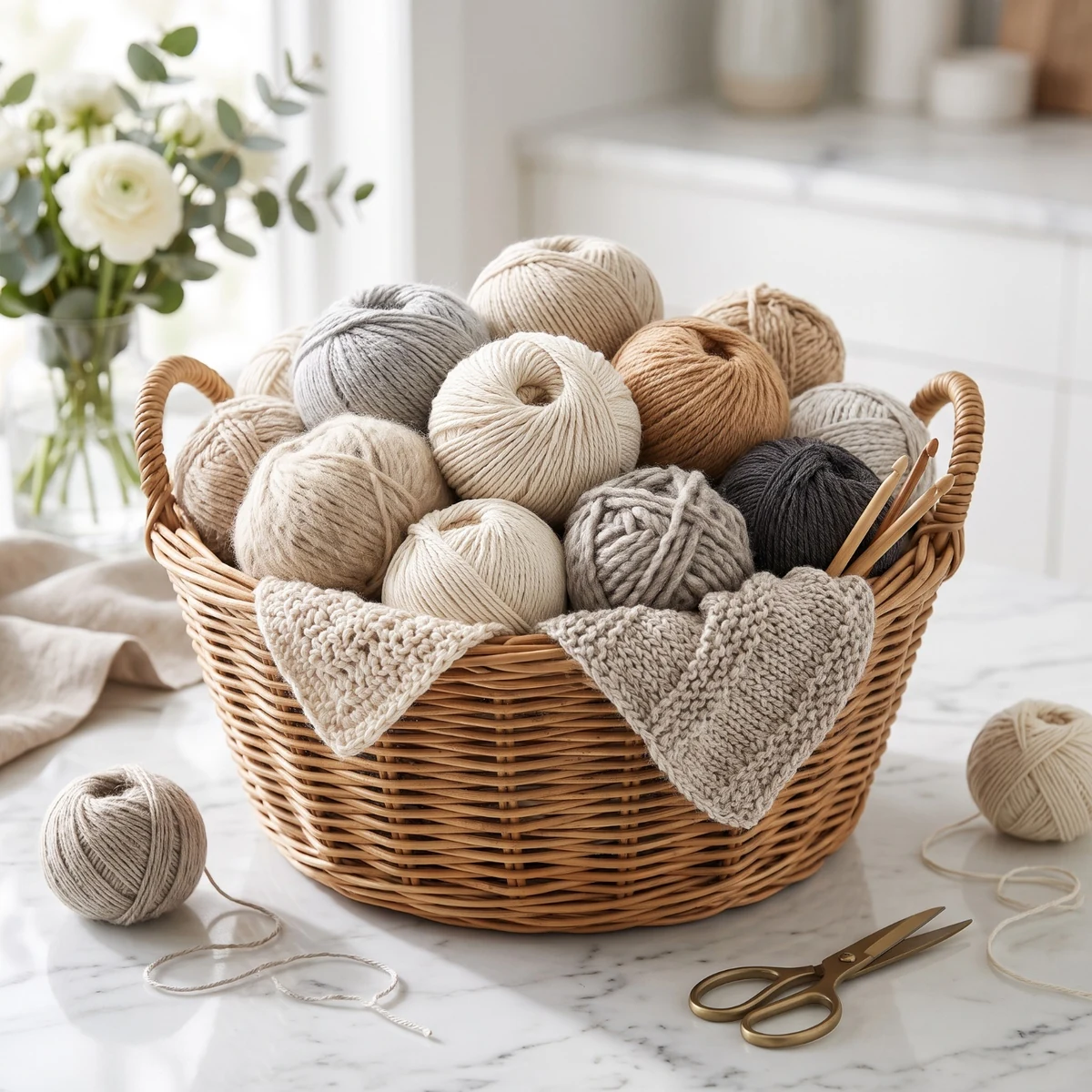
Standing in front of a wall of yarn can be overwhelming, but you only need to answer two questions. What fiber suits the project? And what thickness? Fiber decides how the finished piece feels, wears and washes. Weight decides how big it comes out and how quickly it works up.
The main fibers
- Cotton: strong, cool and absorbent, and it holds its shape. It doesn't have much stretch and can feel hard on your hands. Good for bags, dishcloths, summer tops and potholders.
- Wool: warm, springy and forgiving, and it blocks beautifully. Some people find it scratchy, so try it against your skin. Check the label before washing it, since standard wool can shrink and felt. Good for winter wear.
- Acrylic: cheap, light and easy to wash, and available in almost any color. It can squeak and may pill with use. Avoid it near heat. Good for blankets, toys and practice pieces.
- Blends: a mix of wool and acrylic, or cotton and acrylic, often gives you the best parts of both. They're a safe choice for many projects.
- Alpaca, silk and bamboo: soft and drapey, but usually more expensive. Good for shawls and special gifts.
Yarn weights
Weight means thickness, not how many grams are in the ball. Naming differs by country, so the standard numbers on a label are the most reliable.
- 1 Super fine (fingering): lace, socks and thread-like work, with a 2.25 to 3.5 mm hook
- 2 Fine (sport): baby items, with a 3.5 to 4.5 mm hook
- 3 Light (DK): clothes, amigurumi and accessories, with a 4.5 to 5.5 mm hook
- 4 Medium (worsted, aran): blankets, hats and beginner projects, with a 5.5 to 6.5 mm hook
- 5 Bulky (chunky): quick hats and scarves, with a 6.5 to 9 mm hook
- 6 Super bulky: rugs and thick blankets, with a 9 to 15 mm hook
Our crochet hook size chart lists the hooks in more detail.
Reading the label
A yarn label gives you most of what you need. Look for these:
- Fiber content, and the washing symbols that go with it.
- Weight and length. Length matters more. Two 100 g balls can have very different meter counts.
- Recommended hook. It's a starting point, not a rule.
- Dye lot. Buy all your yarn with the same dye lot number, as batches can vary in color.
Which yarn for which project?
- First project: a smooth, light-colored medium yarn, so that you can see your stitches
- Baby items: soft cotton or baby acrylic that can be machine washed
- Amigurumi: a smooth, tightly spun yarn, as in our guide to the best yarn for amigurumi
- Kitchen items: 100% cotton, since acrylic can melt with heat
- Scarves and hats: something soft enough to wear against your skin
- Bags: cotton, for strength
Before you buy a large amount
Buy one ball and make a small gauge swatch. Wash it the way you'd wash the finished piece, then see how it behaves. A few hours' test is far better than discovering a problem on a whole blanket.
Frequently asked questions
What's the best yarn for a beginner?
A smooth, medium weight yarn in a light color. Avoid dark, fluffy or very thin yarn until your hands are used to the movements. See our crochet for beginners guide.
Can I use a different yarn from the one in the pattern?
Yes, if it's the same weight and you get the same gauge. Compare meters per 100 g, and buy by length rather than by weight.
Is expensive yarn worth it?
For a garment you'll wear for years, often yes. For practice, or for a child's toy, a good acrylic does the job well.
Granny Square Tote Bag, Market Bag & Round Bag Crochet Patterns – Digital crochet pattern (PDF)