How to Crochet a Spiral – Make a Corkscrew Curl That Holds
One chain and one row is all it takes. Here is how the crochet corkscrew works, how to shape it and how to adjust its length and curl.
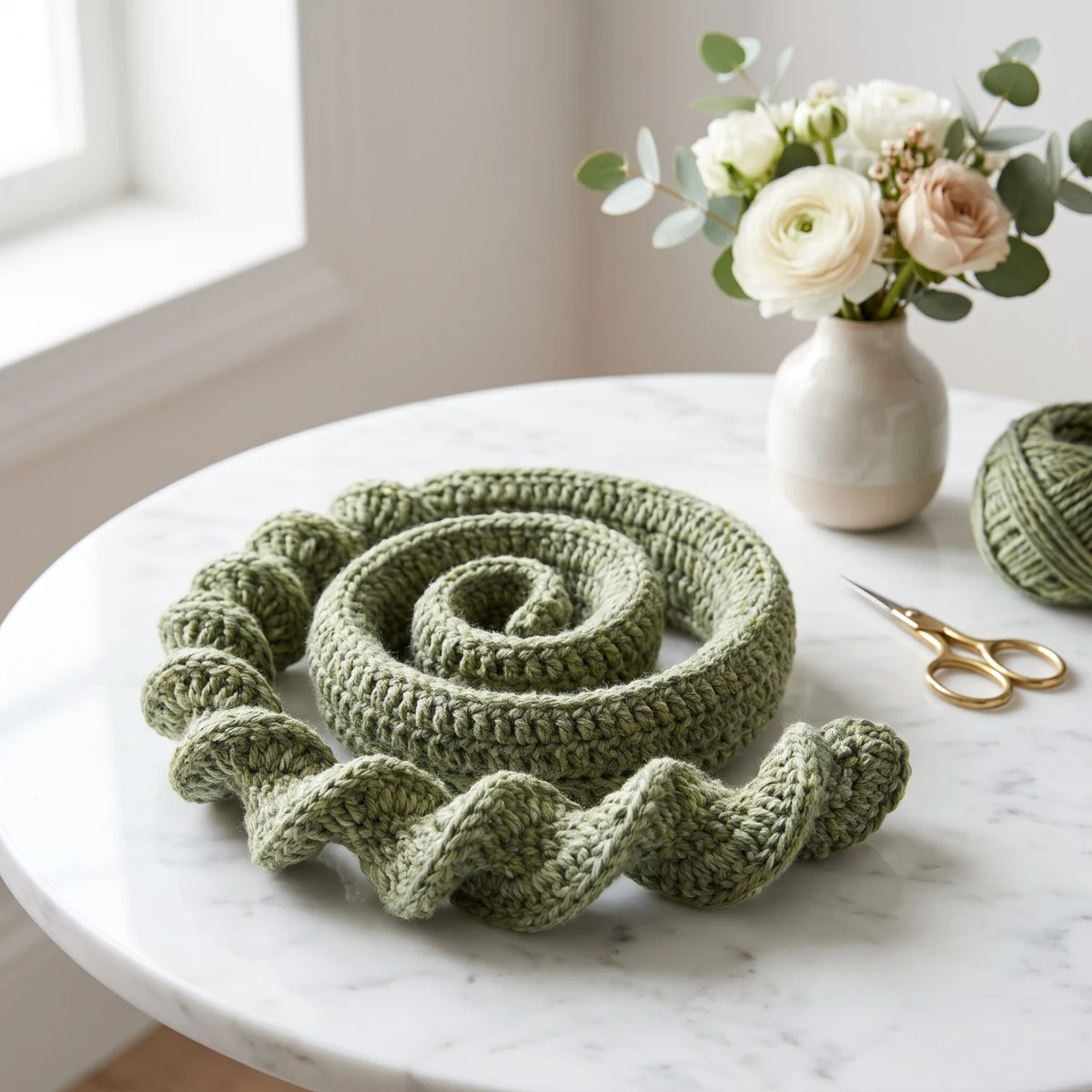
It looks like clever shaping, but a crochet corkscrew takes just one chain and one row. This guide explains how to crochet a spiral that curls by itself, how to shape it evenly and how to adjust it for your own projects. It is the same technique behind all of our Christmas spiral ornaments, but it also works well for hair, ribbons, garlands and gift decorations.
Why does the strip curl?
When you work several stitches into one chain, the top edge of the strip has far more stitches than the bottom edge. The long edge has nowhere to go, so it twists around the short one. The more stitches you crowd into each chain, the tighter the curl.
What you need
- DK or light worsted cotton or acrylic yarn
- A 3.0-3.5 mm crochet hook
- Scissors and a yarn needle
Not sure about the hook? Our crochet hook size chart has the conversions. New to the stitch? Start with how to half double crochet.
How to crochet a spiral, step by step
Make the foundation. Ch 48 loosely. If the chain is tight, the curl may struggle to form, so stay relaxed here. Leave a 15 cm (6 in) tail if you plan to sew something to the end.
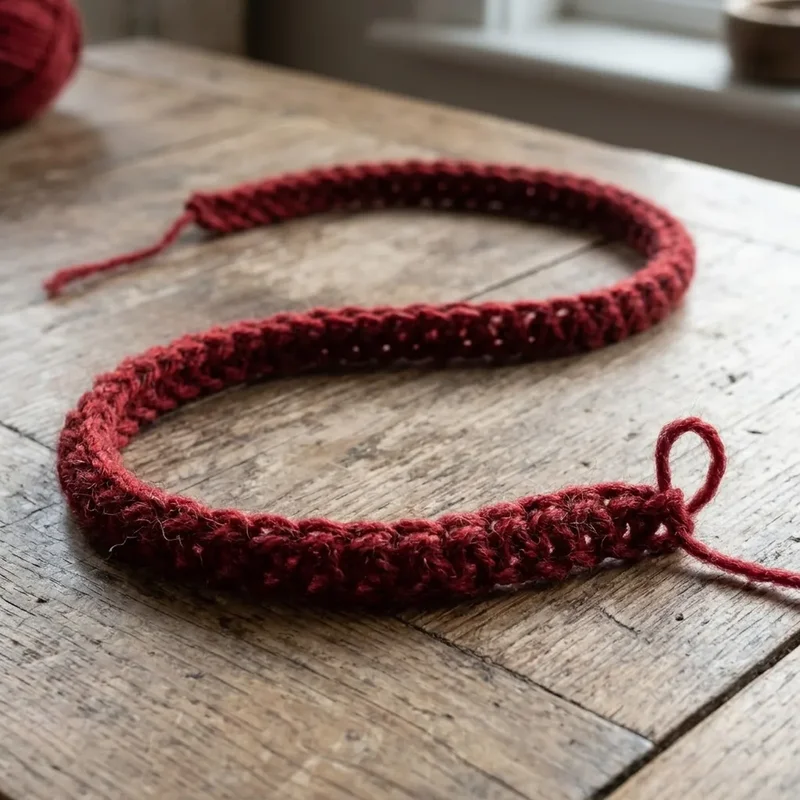
Work the curl row. Starting in the 2nd ch from the hook, work 3 hdc in each ch across. The strip starts curling almost straight away. Fasten off and leave a sewing tail.
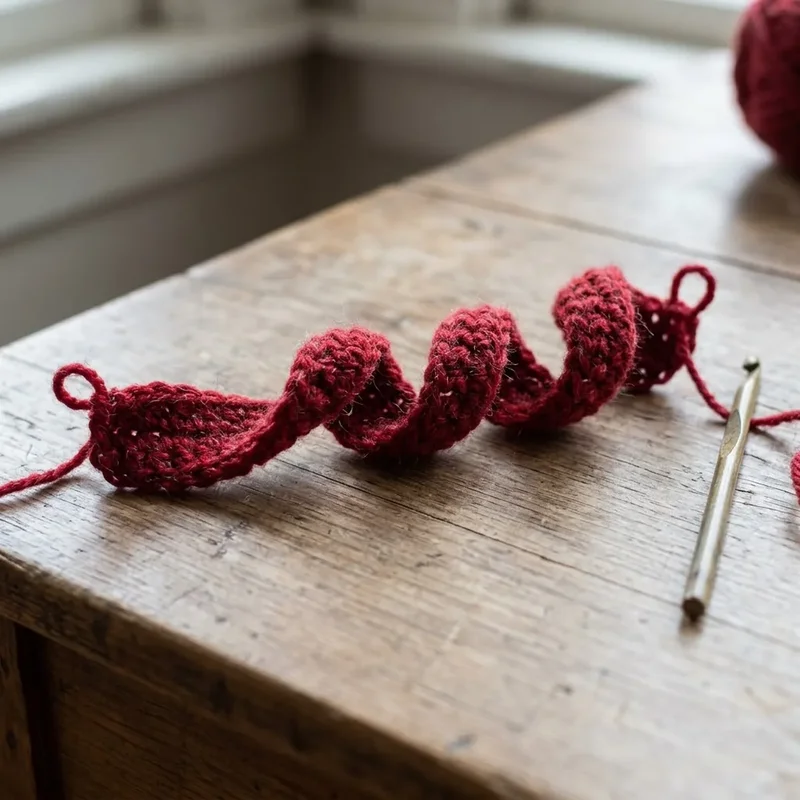
Shape it. Hold the top and bottom, then gently rotate the strip so the loops form an even corkscrew. Do not pull it flat, because that can stretch out the curl.
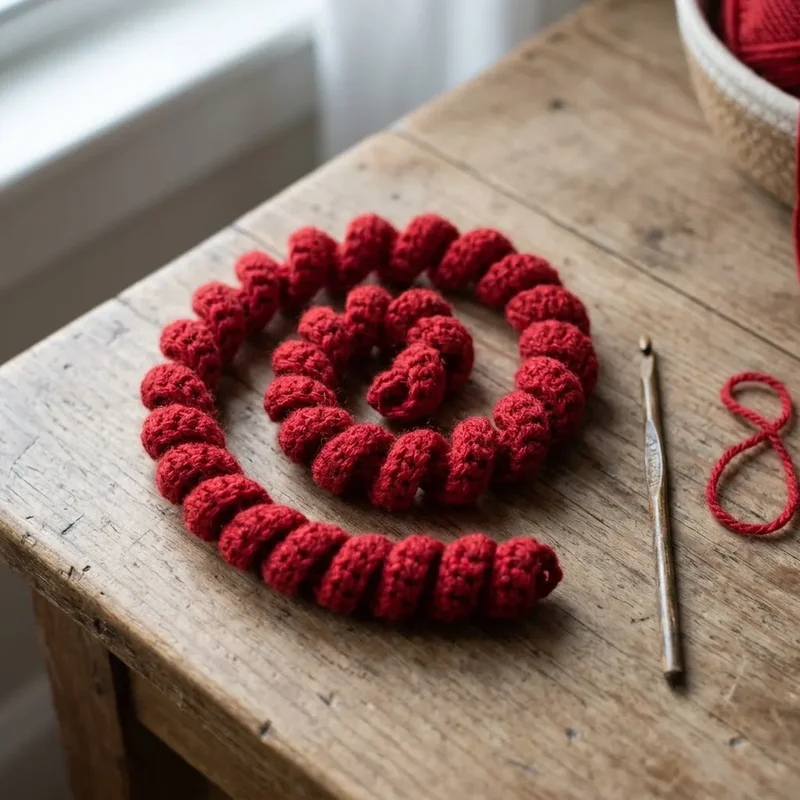
How to change the size and curl
- Shorter spiral: reduce the foundation chain. Going from 48 to 36-42 chains makes a noticeably smaller ornament.
- Longer spiral: add more chains and keep the same stitch pattern.
- Gentler curl: work 2 hdc in each chain instead of 3.
- Tighter curl: keep 3 stitches per chain and use firmer tension or a smaller hook.
- Bigger, bolder curl: use a thicker yarn with a larger hook.
How to add a second color
You have two easy options:
- Color blocks: change color every 8-10 stitches as you work the curl row, as in our elf spiral ornament.
- Contrast edge: crochet a thin contrasting chain and surface slip stitch it along the outer edge, as an option on the Christmas tree spiral.
For narrow stripes, change color every 4-5 stitches, as in the candy cane spiral ornament. Our guide on how to change colors in crochet shows the neat way to do it.
Troubleshooting
- Spiral looks too loose: use a smaller hook, or keep 3 stitches in each chain with slightly firmer tension.
- Spiral is too tight: use a larger hook or switch to 2 hdc per chain. You can also gently steam-shape synthetic yarn from a safe distance.
- Curl is uneven: check that you have the same number of stitches in each chain. Then re-twist it by hand.
- Charm makes it twist: attach a hanging charm through the center of the final curl rather than the outer edge.
Ways to use a crochet spiral
- Christmas ornaments: add a head or topper and a charm at the bottom. We have 10 complete designs, such as the snowman and gnome.
- Beard curls: small versions make the beard on our Santa spiral ornament, using just 8 chains.
- Doll hair: similarly small curls form the hair on our Mrs. Claus ornament.
- Gift decorations: use a short curl in place of curling ribbon on a present.
Frequently asked questions
Which stitch makes the best crochet spiral?
Half double crochet gives a good balance of height and curl, and it is what we use here. Single crochet makes small curls, like beards and hair, while taller stitches make wider ribbons.
Do I need to block the spiral?
Usually not. The curl holds by itself, so shaping it with your hands is enough. If you do want to set the shape, steam synthetic yarn gently from a safe distance, without touching the yarn.
Can I make it with cotton yarn?
Yes. Cotton gives crisp, well-defined curls. Acrylic is a little softer, and either works well.
Crochet Christmas Ornament Set – 10 Amigurumi Patterns – Digital crochet pattern (PDF)