Crochet Invisible Decrease – How to Do It Step by Step
A regular decrease can leave a gap or a bump. The invisible decrease is just as easy and almost disappears into your work.
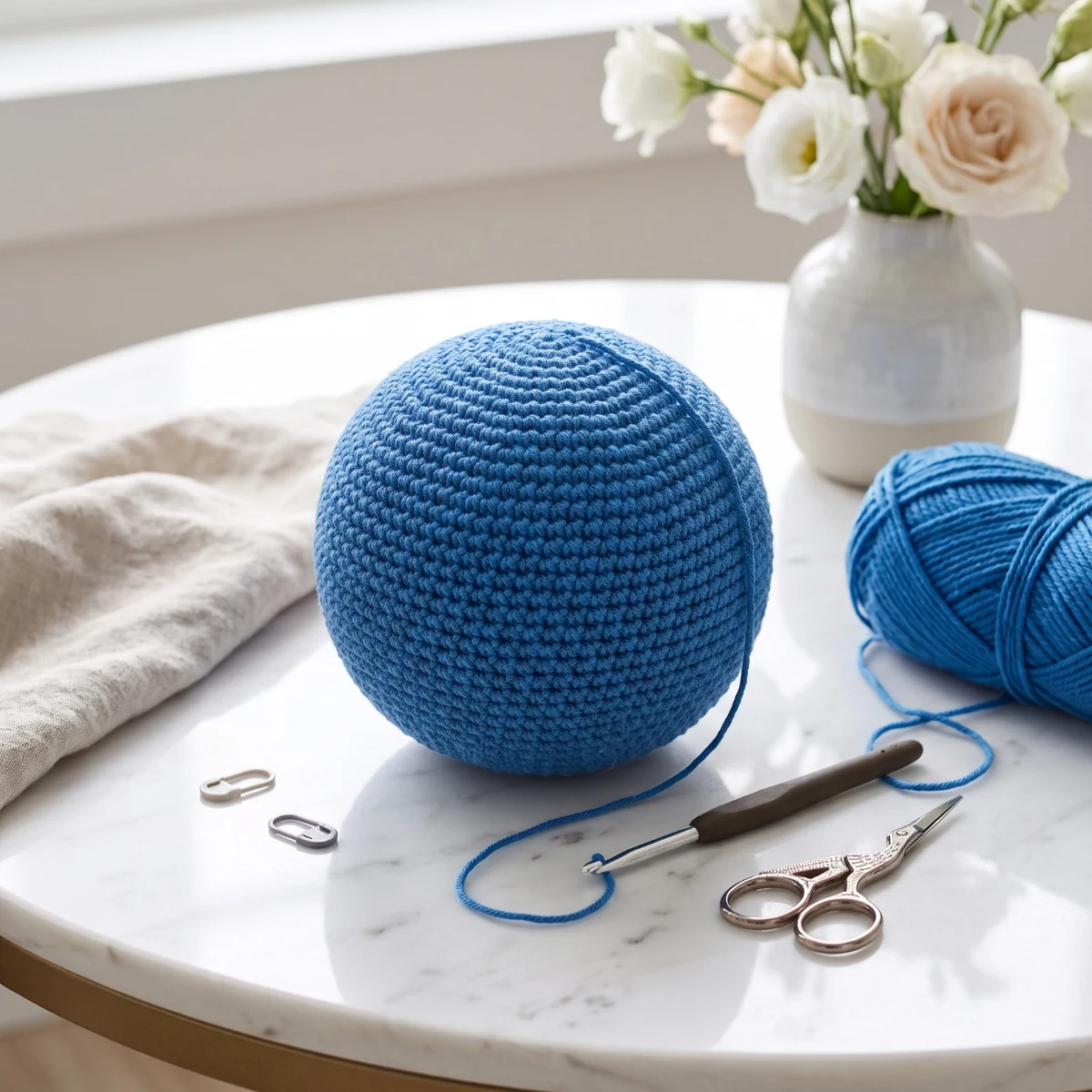
If your amigurumi has little gaps or bumps where the shaping happens, the crochet invisible decrease is the fix. It turns two stitches into one, just like a regular decrease, but it does so by working through the front loops only. That small change leaves the surface smooth, so the stuffing stays hidden and your shaping looks tidy.
You will find it written as "dec" or "invdec" in most amigurumi patterns, and it only takes a few minutes to learn.
What is an invisible decrease?
Each crochet stitch has two loops at the top: the front loop, closest to you, and the back loop, farthest away. A regular single crochet decrease goes under both loops of two stitches. That is a lot of yarn to gather together, so it can create a small bump and leave a gap beside it.
An invisible decrease only picks up the two front loops. The back loops stay where they are and fill the space, which makes the join far less noticeable.
How to do an invisible decrease, step by step
- Insert into the first front loop. Put your hook under the front loop only of the next stitch. You now have 2 loops on your hook.
- Insert into the second front loop. Without yarning over, put your hook under the front loop only of the following stitch. You now have 3 loops on your hook.
- Pull through two. Yarn over and pull through the first two loops on your hook, which are the two front loops. You now have 2 loops on your hook.
- Finish the stitch. Yarn over and pull through both loops.
That is one invisible decrease. You used two stitches from the round below and made one new stitch.
How it looks in a pattern
Here is the closing section of the basic head we use in our Christmas spiral ornaments:
- Round 10: (3 sc, dec) x6. [24]
- Round 11: (2 sc, dec) x6. [18]
- Round 12: (Sc, dec) x6. [12]
- Round 13: Dec around. [6]
Each decrease removes one stitch, so a round with 6 decreases has 6 fewer stitches than the one before. If that notation is new to you, read our guide on how to read a crochet pattern.
Invisible vs. regular decrease
- Appearance: an invisible decrease lies flat, while a regular decrease can leave a small bump.
- Gaps: an invisible decrease closes up more neatly, which matters when there is stuffing behind it.
- Difficulty: both are beginner-friendly and take about the same time.
- Stitch count: both turn 2 stitches into 1, so your pattern's counts do not change.
Unless a pattern specifically says otherwise, you can usually swap a regular single crochet decrease for an invisible one.
Common mistakes and how to fix them
- Stitch count is off: you may have skipped over the decrease when working the next round. Each decrease has one top, so work one stitch into it. A stitch marker makes this easier to spot.
- Holes still show: use a smaller hook. Amigurumi is usually worked tighter than other crochet, and fiberfill can show through loose stitches.
- Decreases form a visible line: when several rounds stack them in the same place, shift the starting point slightly, or follow a pattern that already staggers them.
- The hook gets stuck: you may be catching both loops. Go under the front loop only, which is the one closest to you.
Where to use it next
Finish closing a head with the last stitches, then practice on a complete project:
- Snowman spiral ornament, which uses decreases on the head
- Christmas bear spiral ornament, which uses the same head with ears and a muzzle
- How to crochet a magic ring, for the other end of the head
- How to attach safety eyes, which go in before you close the head
Frequently asked questions
Can I use an invisible decrease with half double crochet?
Yes, the same front-loop idea can be used for half double crochet, though the steps differ slightly. Most amigurumi uses it in single crochet.
Is dec the same as invdec?
Often, but not always. "Invdec" always means an invisible decrease. "Dec" can mean either, so check the abbreviations list at the start of your pattern.
Which side is the right side?
When you crochet in a continuous spiral, the outside of your piece is usually the side facing you as you work. The front loops are the ones closest to you, on the outer side of the round.
Crochet Christmas Ornament Set – 10 Amigurumi Patterns – Digital crochet pattern (PDF)